
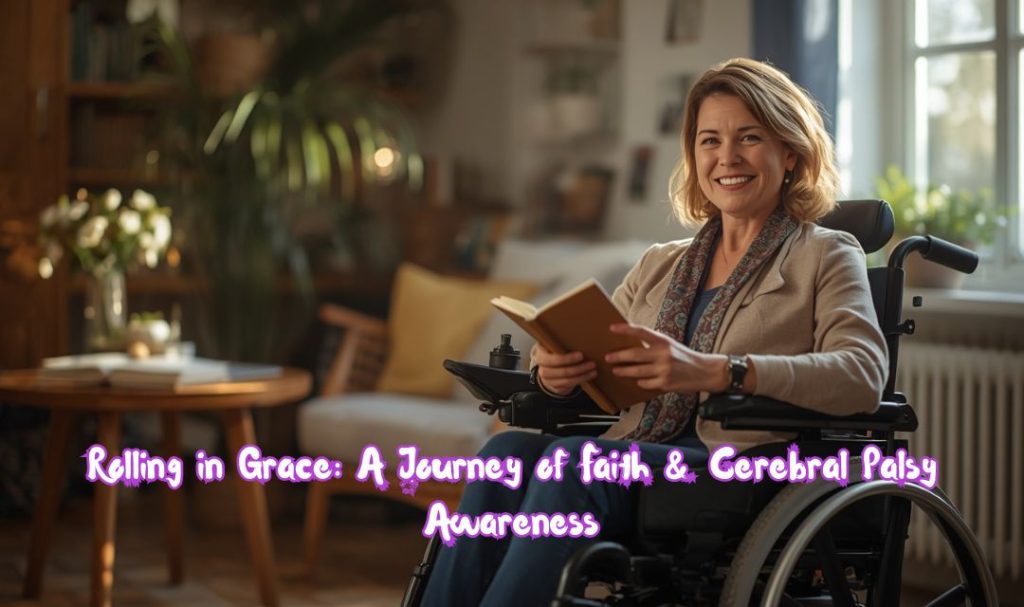
When people search for books about disability, they are often looking for more than information. They are looking for a story that helps them understand what life feels like from the inside. That is where Brooke Brown’s Rolling in Grace becomes such a meaningful read.
Brooke does not write from a distance. She writes from the middle of the journey, with honesty, humor, faith, and the kind of reflection that makes readers slow down. Her story opens the door to life with cerebral palsy, but it also speaks to anyone who has ever felt unseen, misunderstood, or quietly underestimated.
Rolling in Grace is not written like a textbook or a medical explanation. It feels like sitting with someone who is finally telling the truth in her own words.
Not Every Disability Story Looks the Same
Disability is a broad word, and every person’s story is different. Some readers may search for books about learning disabilities because they want to understand how people think, process, communicate, or move through school and daily life. Others may be looking for books about disability that focus on mobility, accessibility, faith, family, or the emotional weight of being misunderstood.
Brooke’s story is specifically about living with cerebral palsy. That matters because it helps readers understand the difference between assumptions and reality.
In Rolling in Grace, Brooke shares that she uses a power wheelchair for independent mobility and has speech challenges, but she also makes something very clear: her body and speech do not define her mind, her faith, her creativity, or her purpose.
That is one of the quiet strengths of the book. It gently corrects what many people get wrong without sounding angry or distant. Brooke invites readers to see the whole person.
Understanding Cerebral Palsy Through Brooke’s Eyes
Cerebral palsy awareness becomes much more personal when it is told through a life, not a list of symptoms.
Brooke writes about the daily reality of adapting to a world that is not always built with her in mind. She talks about her power wheelchair, speech difficulties, physical limitations, pain, independence, and the constant need to navigate situations that many people never have to think about.
But her story does not stop at the difficulty.
She also writes about imagination, writing, friendships, school, ministry, faith, and the deep desire to be understood. She shows readers that cerebral palsy is part of her life, but it is not the whole story. Her chair helps her move through the world. Her voice may require patience from others, but her words still carry clarity, depth, and meaning.
That is why Rolling in Grace feels so important. It brings cerebral palsy awareness into everyday moments where understanding can actually begin.
Rolling in Grace Is Not Written for Pity
Brooke is not asking readers to feel sorry for her.
That may be one of the most powerful parts of the book.
She shares painful moments, yes. She talks about frustration, misunderstanding, ableism, loneliness, and the exhaustion that can come with being treated as less capable than she is. But pity is never the point.
Her story asks for something better than pity. It asks for courage. It asks for a connection. It asks for faith. It asks readers to look at disability without lowering their expectations of the person living with it.
There is a difference between compassion and pity. Compassion listens. Pity often assumes. Brooke’s memoir helps readers understand that difference.
The Assumptions People Carry Without Realizing It
Sometimes a story opens a door we did not know was closed.
Books about disability can do that because they help readers notice the assumptions they may carry without meaning to. Brooke’s life has included moments when people judged her intelligence based on her speech, her independence based on her wheelchair, or her ability based on what they saw first.
Those assumptions hurt, even when they are wrapped in politeness.
Rolling in Grace gives readers room to think about how they respond to difference. Do they avoid conversation because they are uncomfortable? Do they nod along when they do not understand someone’s speech? Do they speak to the person directly, or do they talk around them?
Brooke’s story reminds us that being seen fully often begins with being listened to fully.
Faith in the Middle of Frustration
Faith is not used in Rolling in Grace to make the hard parts disappear. Brooke does not pretend that life with cerebral palsy has been simple or painless. She does not skip over frustration, loneliness, or the moments when her body feels like a daily challenge.
Instead, faith becomes the place where she brings all of it.
Her relationship with God gives the story its center. Brooke writes with the belief that even her limitations can hold purpose in God’s hands. That does not mean every moment feels beautiful. It means grace can still be found in the middle of the mess.
For readers who enjoy faith-based memoirs, this part of Brooke’s story will feel especially honest. She does not offer easy answers. She offers a lived reminder that God can still be present when life is complicated.
A Memoir That Helps Readers Listen Better
Cerebral palsy awareness is not only about knowing the right terms. It is also about learning how to listen with patience, humility, and care.
Brooke’s story helps readers do that.
Her memoir gives people a chance to hear from someone who has had to fight to be understood in more ways than one. She writes about communication challenges with honesty, but she also shows the beauty that can happen when someone takes the time to listen well.
That is one reason this book feels so personal. Readers are not simply learning facts about cerebral palsy. They are being invited into Brooke’s perspective, where daily experiences, memories, faith, and reflection all work together.
By the time readers finish, they may find themselves thinking differently about conversation, accessibility, friendship, and what it really means to honor someone’s voice.
Why Rolling in Grace Belongs in Disability Awareness Conversations
Rolling in Grace belongs in disability awareness conversations because it brings together the pieces people often separate.
It is personal, but it is also thoughtful. It is faith-filled, but it is still honest about pain. It is about cerebral palsy, but it also speaks to broader questions of identity, belonging, and purpose.
For churches, the book can open deeper conversations about inclusion, compassion, and the image of God in every person. For families, it can offer perspective on advocacy and encouragement. For book clubs, it gives readers meaningful themes to discuss. For educators and disability awareness groups, it offers a human story that can help people move beyond surface-level understanding.
Among books about disability, Brooke’s memoir stands out because it does not flatten disability into one lesson. It lets the reader sit with the full story.
Final Thoughts: Grace Does Not Always Look the Way We Expect
Grace does not always arrive in the form we imagined.
Sometimes it comes through hardship. Sometimes through humor. Sometimes, through a power wheelchair, a hard conversation, a friendship, a prayer, or a story that finally gives words to what someone has carried for years.
That is the heart of Rolling in Grace. Brooke Brown’s memoir brings cerebral palsy awareness, disability understanding, and faith together through one deeply personal story. It reminds readers that a life can be difficult and meaningful at the same time. It can be marked by frustration and still be full of purpose. Read Rolling in Grace by Brooke Brown to experience a faith-filled memoir that brings cerebral palsy awareness, disability understanding, and hope together through one deeply personal story.
One Response